
News Roundup: Mar 23, 2026
Check out the video!
Rivian’s R2 Gets Real
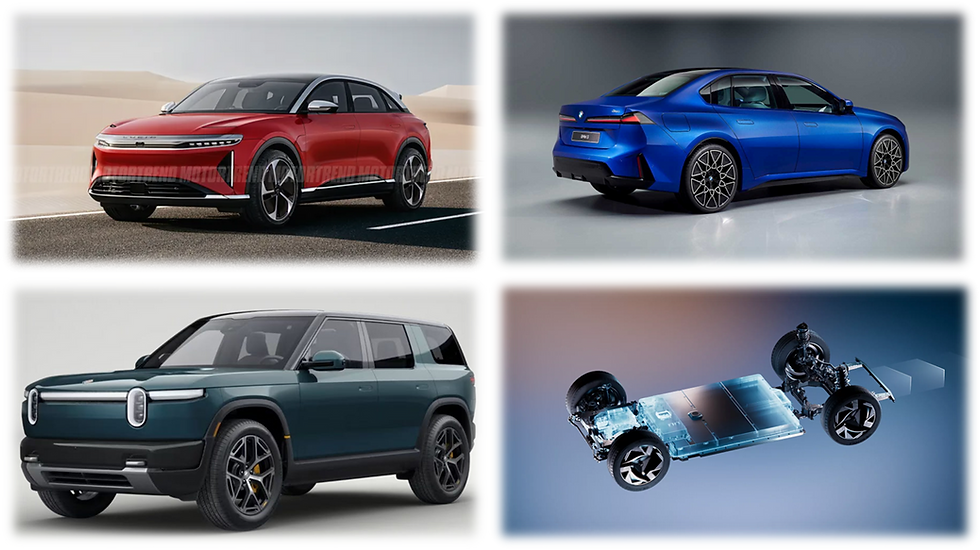
The Rivian R2, first previewed as a prototype two years ago, has now been formally detailed as a compact electric SUV launching initially in higher‑priced trims, with standard, premium, and performance models ranging from about $49,000 to $58,000, while the originally promised $45,000 version is delayed until later in 2027. In dual‑motor form it delivers a striking 656 horsepower, outperforming luxury rivals like the Mercedes GLC EQ and BMW iX3 M60, while leaving room for a future tri‑motor performance variant. Charging performance is competitive but not class‑leading, reportedly reaching 10–80% in about 30 minutes at up to 240 kW, trailing newer 800‑volt competitors. Off‑road capability stands out thanks to 9.6 inches of ground clearance, positioning it closer to adventure‑focused vehicles than luxury crossovers. Inside, the design remains familiar, with real birch wood trim in upper trims, Rivian’s new in‑house assistant, and an optional Autonomy+ hands‑free driving package that relies on cameras and radar rather than lidar.
AutoPerspectives is a reader-supported publication. To receive new posts and support my work, consider becoming a free or paid subscriber.
WHY IT MATTERS: This is Rivian’s “Model 3” moment, whereby the company goes from a premium, lower-volume business model into a higher-volume market. It’s a make-or-break moment for Rivian, and the info released so far suggest that, just as the R1S has done well in some markets against legacy luxury car brands, the R2 represents just as big a threat.
THE BOTTOM LINE: Stylish, capable, and efficient; the only thing the R2 lacks is a brand with more visibility—but that may change.
Lucid’s Next Wave
Lucid outlined an ambitious midsize EV strategy at its Investor Day, led by the Cosmos, a smaller and more efficient sibling to the Gravity designed to deliver best‑in‑class interior space, up to 4.5 miles per kWh, a 0–60 mph time of 3.5 seconds, and a starting price below $50,000. Major cost reductions underpin the program, including a 50% cut in labor and overhead versus the Air and Gravity, lower insurance costs from a modular mixed‑metal structure, and new Atlas motors and battery systems that significantly reduce parts count, mass, and cost. The Cosmos is expected to use an advanced high‑voltage electrical architecture, support vehicle‑to‑everything functionality, and achieve 300 miles of range with a battery cost advantage over Tesla. Its interior evolves Lucid’s design language with a wide high‑mounted display and physical controls, while software will run on the new Lucid AI Experience platform. A closely related second model, Earth, will share most components but target a more functional, upright positioning closer to vehicles like the Rivian R2.
WHY IT MATTERS: This is Lucid’s “Model 3” moment as well—but, without a deal similar to Rivian’s joint venture with VW Group (which is generating significant cash flow), the Cosmos and its siblings are even more crucial. Unfortunately, we still haven’t seen the final product, but the initial info suggests a highly competitive product.
THE BOTTOM LINE: Too soon to tell, but Lucid seems to be making all the right moves with its new platform.
Lucid’s New Robotaxi
As a surprise announcement, Lucid revealed Lunar, a fully autonomous robotaxi concept built on the same midsize platform as the Cosmos and Earth to showcase the system’s ultimate efficiency and capability. Designed as a two‑seat vehicle with no steering wheel or pedals, Lunar features a full‑width display and aims to achieve extraordinary efficiency figures of up to 5.5–6 miles per kWh, well beyond today’s production EVs. While not officially approved for production, the concept highlights Lucid’s platform flexibility and comes at a time when Uber has already committed to purchasing large numbers of Lucid Gravity vehicles for robotaxi use, positioning Lunar as a potential future entry‑level autonomous offering.
WHY IT MATTERS: The robotaxi business has been getting a lot of attention over the past year or so, and the Lunar would be a direct competitor to Rimac’s Verne and Tesla’s Cybercab.
THE BOTTOM LINE: Like the Cosmos, the Lunar isn’t quite a fully-formed product yet, but suggests Lucid is heading in the right direction.
BMW’s 3 Goes Electric
The new BMW i3 marks the second Neue Klasse EV and a major shift from the original carbon‑fiber hatchback, reestablishing the 3 Series as a core electric sedan after more than 50 years and over 20 million units sold. BMW emphasizes the efficiency advantage of a sedan body style, citing a 12% WLTP range increase compared with the iX3 despite shared platform and powertrain components, and has also teased a future i3 Touring wagon. Technologically, the i3 mirrors the iX3 with features like 400 kW NACS charging, Panoramic iDrive, and BMW’s new centralized electronic architecture, making it more of a refined evolution than a clean‑sheet innovation. Its biggest challenge may come from BMW’s upcoming next‑generation ICE 3 Series, which will offer multiple powertrains alongside similar design and technology, while the new i3 effectively replaces the current i4 Gran Coupe.
WHY IT MATTERS: The 3 has always been a core product for the brand, and so BMW has big volume hopes for this entry. Its competition includes not only the recently updated Model 3 but the upcoming Mercedes C-Class EQ and Audi A4 e-tron.
THE BOTTOM LINE: The i3 seems to be just as competitive in its class as the iX3 is against the upcoming wave of compact SUVs, and bodes well for the rest of the Neue Klasse portfolio.
Renault’s Next-Generation EVs
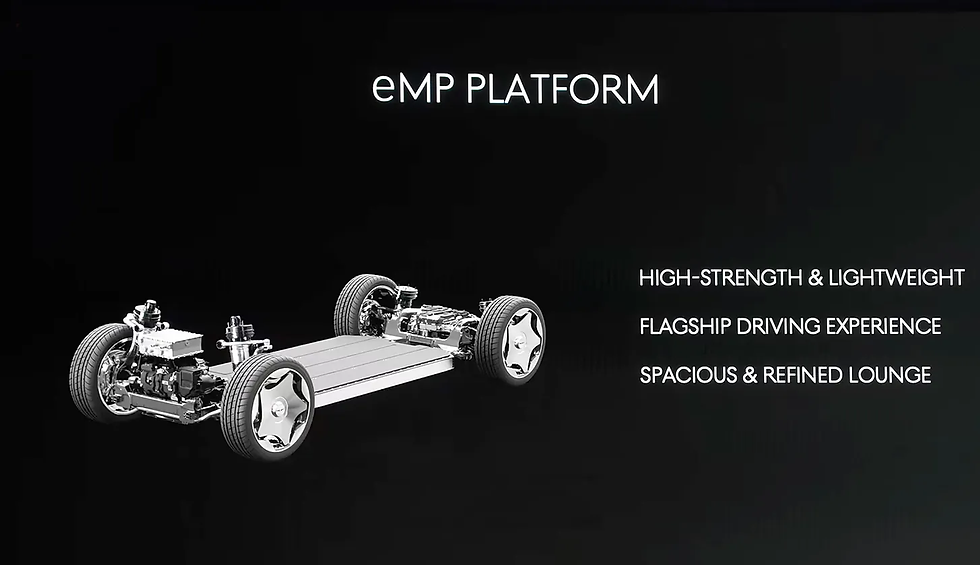
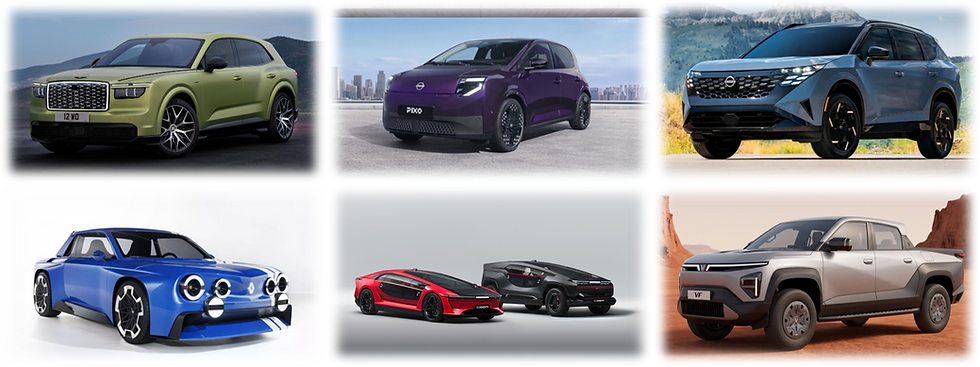
Renault detailed its next‑generation EV strategy under the newly renamed RGEV Medium 2.0 platform, targeting a 40% total cost reduction and price parity with hybrid vehicles as part of a broader Futuready roadmap aiming for a 50/50 split between electrified and hybrid models in Europe by 2030. Supporting vehicles from the B+ to D segments, the platform promises EPA‑equivalent ranges of up to roughly 370 miles, optional range extenders pushing total WLTP range toward 870 miles, and advanced features such as four‑wheel steering and cell‑to‑body construction. The architecture supports multiple battery chemistries, an 800‑volt electrical system, and highly integrated power electronics, while Renault plans to use in‑house motors for higher‑performance models and sourced motors for entry‑level EVs to further control cost and complexity.
WHY IT MATTERS: Renault (and Nissan) were out front with the original CMF C/D architecture, and this new platform brings all the right ideas to the masses, including 800V charging and cell-to-body construction. With all the delays to VW’s comparable SSP architecture, this could put Renault out front.
THE BOTTOM LINE: RGEV Medium 2.0 has everything you could want in a 2nd-generation EV architecture; the rest of Europe should get ready.
#rivian #rivianr2 #lucid #cosmos #ev #electricvehicle #erev #robotaxi #bmw #i3 #bmw3series #neueklasse #renault #automotive #autoperspectives
Comments