
Slate: Small, Simple, Affordable... Brilliant?
- Adam Bernard
- Apr 28, 2025
- 10 min read

In 1998, through an unexpected combination of circumstances, I became the proud owner of a 1972 Austin Mini (and, yes, I still own it). Over the years, I’ve learned a lot about the history of this innovative vehicle and its evolution as Britain’s “people’s car”, if you will: small, distinctive, fun, minimalist, and, as the years progressed, almost infinitely personalizable.
The announcement of the Slate EV—small, distinctive, fun, minimalist, and almost infinitely personalizable—resonated with me, and, as it transpires, a whole bunch of others both inside and outside the automotive community. With a few days to digest all that’s been revealed and written about the company and the product, let’s look at what works—and what’s at risk.
WHO IS SLATE?

First, let’s credit everyone connected with keeping this project under wraps for over two years; in today’s leak-filled, over-surveilled world, it’s almost impossible to keep a secret. I first heard about it several months ago when a friend of mine got a job there (and, given my former role in competitor intelligence, he assumed I had heard of it). TechCrunch broke the big news a couple of weeks ago, and last week’s reveal and a LinkedIn deep dive revealed rather a bit more.
Unlike many startups, funding does not appear to be an issue, with former Amazon CEO Jeff Bezos being the biggest name behind this project. Evolved from another Bezos-backed company, Re:Build Manufacturing, Slate raised $111 million in funding in 2023, and additional funds were raised last year. There are already about 400 employees in place, with experience at Ford, GM, Stellantis, and Harley-Davidson, among others, working in Troy, Michigan (their HQ) and Long Beach, California (their design studio). The leadership team includes a CEO with over a decade’s experience at Chrysler, a design chief who used to run Volvo’s interior design team, and others with backgrounds at a variety of EV startups, living and dead—Rivian, Tesla, Lordstown, Byton, and Faraday Future. Their CMO is notably non-automotive, with previous experience at Grubhub, and Automotive News details some of Slate’s unorthodox go-to-market strategies.
THE PITCH

It’s a straightforward premise: “We Make It. You Build It.”—all starting at under $27,500 (or, as Slate notes, under $20,000 after incentives). The name Slate is rather clever, as not only is it the color of every vehicle rolling off the assembly line, but the vehicle itself is a blank slate. There’s one bodystyle, one trim level, one set of wheels, one motor, and one interior color. The only configurable item ahead of time is the battery (small or large); anything else you want is added after the assembly process. So, while many automakers are struggling to reduce build combinations to eliminate complexity and reduce cost (and boost quality), Slate has reduced their build combinations to… two. And the molded-in slate-colored body panels don’t require a paint shop (not unlike the Cybertruck’s stainless steel body panels), saving the company about $350 million in investment.
Slate also appears to have addressed the question of handling sales and service, but some details have yet to be revealed. A “national logistics and distribution partner” will allow buyers to retrieve their ordered-online Slate in a “friction-free” process, and, for a few dollars more, they’ll deliver it to your door. A “nationwide service provider” with 2,500 locations will handle the service side for Slate owners. So, there are no franchised dealers, and apparently not even any “stores”.
MAKING IT
Initially, Slate referenced “the Midwest” as a manufacturing site, but Indiana was mentioned at the launch event, and other records point to a former R.R. Donnelly printing plant in Warsaw, which could create up to 2,000 jobs. The target launch is Q4 2026—yes, only about eighteen months from now—and Slate claims most parts are sourced in the US, including battery and materials. The plant is targeted to build about 150,000 vehicles a year—and, unlike many startups, Slate has yet to talk about expanding beyond that in terms of either markets or products.
BUILDING IT
Without a paint shop, Slate is relying on wraps to add color to your vehicle, with clever names like Teal It To Your Mama, Yellow Snow, and Squid Ink—again, not unlike what Tesla was offering initially on the Cybertruck. There are three levels of wrap available: do-it-yourself (enabled with pre-cut materials and relatively flat surfaces), pre-installed by Slate’s partner, or installed by a local installation partner. There are also plenty of decals, partial wraps, stripes, and wheel options available.
At launch, there are over 100 accessories, from bumpers to fender flares to interior trim packs to speakers. Yes, speakers—the blank Slate doesn’t come with any audio setup, not unlike my ’72 Mini. There’s also a “flat pack” SUV kit which includes a rear section to cover the bed, a rear bench seat, airbags, and roll cage; you have your choice of a conventional SUV profile, a Rivian R3-esque fastback, or an open-air version (but no optional canvas roof—at least, not yet). And, if you look closely, you’ll see actual fasteners on the body panels; Slate notes there are over one hundred “attach points” that will fit additional accessories. Those visible fasteners would also likely make the Slate easier to repair.

Too many options? Don’t worry; just as the Bentley configurator offers suggestions like Storm Noir and Winter Flame for the new Continental GT Speed, Slate offers a wide array of Starter Packs to inspire you. From Petal to the Metal to Grit and Grind, Slate has specced out 25 combinations of color, trim, accessories, and body styles to inspire you. Finally, if all this DIY stuff scares you, there’s Slate University, which provides a library of tutorial videos on how to do all these upgrades yourself if you so choose.

If this sounds slightly familiar, it should; Fiat proposed a similar concept with their Centoventi concept at the Geneva Motor Show five years ago. Offered as “a blank canvas ready to be styled”, Fiat claimed, “You will be the designer of your own special edition". The single-color, single-bodystyle small hatchback featured different roof covers, wheels, and wraps, as well as a pegboard-style instrument panel to attach photo frames, vases, etc. Fiat even envisioned a community where owners would design their own 3D-printed accessories. But while Fiat’s idea never made it into production, much of the philosophy exists with the Slate.

DESIGN, PACKAGING, AND STRUCTURE
If you asked your average American child to draw a small pickup truck, it probably wouldn’t look too different from the Slate (although it might have monster-sized offroad tires). The Slate is a regular-cab, two-passenger (sorry, no bench seat) pickup with a 5’ bed (6” longer than a Maverick)—and a surprisingly spacious 7-cubic-foot frunk. The bed is 50” wide over the wheel wells, so you can carry a 4’ wide sheet of plywood.
It’s a simple, tidy design, free of frills and frippery (which, of course, the buyer is free to add at their leisure). A bit of Land Rover here, a hint of Scout, a bit of Rivian there—nothing groundbreaking, but not polarizing like the Cybertruck, either. You could argue there are no brand-specific design cues, like Rivian’s “stadium” headlamps, which may be fine for many people who are willing to spend money on personalization.

At 2’ shorter and 2” narrower than the Ford Maverick (and very close to the size of the original Nissan Hardbody), it’s extremely well-suited to urban driving. The interior is equally straightforward, with a slab-like instrument panel, a small digital cluster, physical knobs for climate control, a column-mounted shifter—and, as mentioned, no screen.
We must, of course, talk about seating capacity. There are no regular cab offerings in the midsize truck segment in the US, and even Ford and GM dropped the limited-functionality extended cab variants of their midsize trucks in their latest iterations, which are only a few years old.
The Autopian did a rather comprehensive deep dive under the skin of the Slate, and what they uncovered is, like the rest of the truck, fairly conventional. The steel structure is a hybrid between monocoque and body-on-frame. There are MacPherson struts front, while the rear axle is live (albeit a rather exotic five-link DeDion setup, once favored by Alfa Romeo and Aston Martin).
Fun fact: AMC enthusiasts will note the side-hinged door handles are dead ringers for those used on Pacers and Gremlins back in the 1970s…
BELLS AND WHISTLES
Would you like a screen? Bring your own, either using the universal smartphone mount or a larger accessory to mount a tablet. Either can be connected to the Slate with their app. That’s how you get audio, too—courtesy of a Bluetooth connection to accessory speakers or your own speaker, which you can mount with an additional accessory rack. The app reportedly includes some diagnostic capabilities, so if something on the vehicle is misbehaving, there is help available. Want to remote start or precondition your vehicle? Good question—because there’s no onboard operating system, it’s not clear if that capability is available. There is a fob (available in several different finishes) that fits into a slot on the dashboard, so one assumes there is remote functionality included with it.
Slate says they are targeting a 5-star NCAP safety rating, and it appears a reasonably comprehensive safety technology suite is standard: active emergency braking, forward collision warning, pedestrian identification, backup camera, stability control, traction control, and up to 8 airbags. Interested in automated driving? Sorry, no; there’s cruise control available (but not adaptive) and no other indication of anything like lane centering or lane-keeping.
WHAT CAN IT DO?
Let’s remember this is a small, two-passenger pickup, which means that 1,000lb of towing and 1,400lb of payload are pretty reasonable given what we are working with. The rear-mounted 150kW motor provides decent acceleration—0-60mph in about 8sec. There’s no indication of AWD capability, which is a bit unfortunate for colder and more slippery parts of the country; a rear-drive truck with an unladen is not the best option in rain or snow, although the 3,602lb curb weight and battery-enabled low center of gravity may help in low-traction situations.
You do get a choice of batteries: 52.7 kWh (150 mi range) or 84.3 kWh (240 mi range), from Korea’s SK On. They’re not the lower-cost lithium iron phosphate (LFP) batteries other automakers are using, because Slate says the existing supply chain would make it difficult to qualify for US incentives (which include guidelines on battery sourcing). And, no, those ranges don’t suggest a super-efficient execution, which is not unexpected; at this price point, and for a pickup bodystyle, lightweighting and aerodynamics are not high priorities. Slate’s head of engineering was also asked about range extenders and said, “It’s not a consideration for us.”
Not surprisingly, an NACS port on the left quarter is standard, so you get access to the Tesla Supercharger network. The 120kW charge rate isn’t mind-boggling, but competitive at this price point, and 30min for a 20-80% charge is reasonable. You can also get 11kW of AC home charging, and Driving.ca uncovered a connection to Canada’s Exro, which has developed technology that could allow AC charging from 19-80 kW and eliminate the costly auxiliary onboard charger-inverter. If that’s true, that helps Slate make money at a low price point and could boost charging speeds at home.
THE VALUE PROPOSITION
The “under $20,000” price point has been the source of numerous headlines, but let’s remember that includes the current $7,500 incentive, which may or may not survive under the current administration. Without it, we’re looking at a starting price of about $27,000 for a vehicle with no options (and no audio system). That happens to be the base price of a 2025 Ford Maverick Hybrid, with multiple color options, a rear seat, a touchscreen, and a radio. A similar case could be made for the suddenly sleeker Toyota Prius, which starts at just over $28,000. “But wait,” you say. “Those aren’t electric!”
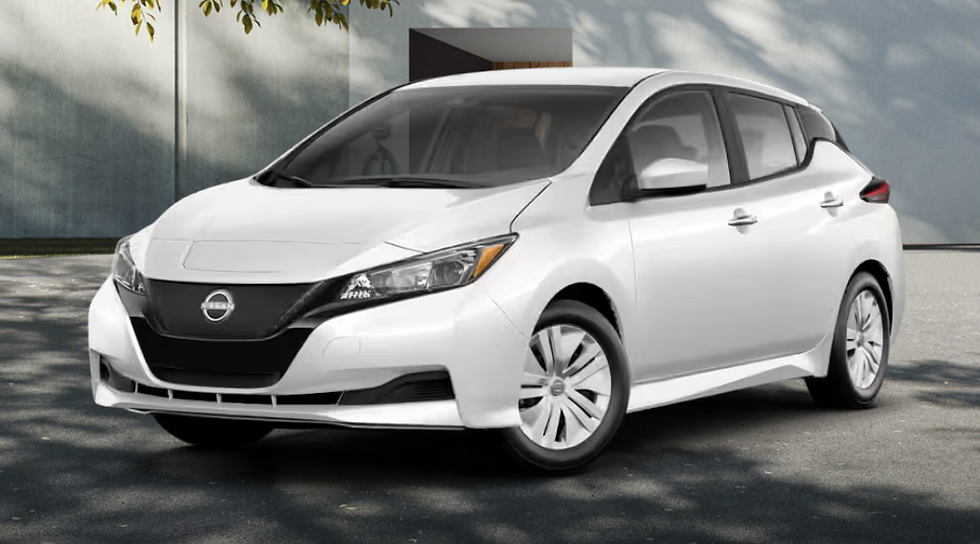
Let’s look at the about-to-be-replaced Nissan Leaf (whose replacement will be repositioned as a small SUV). For a bit over $28,000, you get five seats, a touchscreen, an audio system, a choice of colors, a 149-mile range, and can scoot from 0-60 in under 8 seconds. It’s arguably not as functional as the Slate, and you don’t have the vast array of personalization options available, but if those EV incentives vanish, the Slate may look a bit less desirable, given other alternatives.
And speaking of alternatives, let’s not forget Ford’s plan to launch a new affordable EV being developed at a skunkworks in (coincidentally) Long Beach, California. That vehicle will appear in 2027, initially as a “midsize” (I am guessing Maverick-sized) pickup, with other variants (including an SUV) to follow. A $25,000 price point has been floated around, but it’s unclear if that’s before or after incentives, but it’s something that could be playing in the same space as Slate.
THE BOTTOM LINE
There are many interesting things about Slate—both the product and business model--worth looking at...
THE UPSIDE
THE PRODUCT | THE BUSINESS |
|
|
THE DOWNSIDE
THE PRODUCT | THE BUSINESS |
|
|
While I’m personally not sufficiently motivated to consider swapping my 2025 Mini for a Slate, they seem to have hit several resonant points with potential buyers: affordability, personalization, simplicity, and zero emissions. Unlike some startups, they appear to have resources, experience, and a plan. Yes, there are some open questions and some challenges, but I’d say they are in better shape than you think. We’ll see what the next eighteen months brings in this saga…


Comments