
News Roundup: Feb 9, 2026
Check out the video: https://youtu.be/rGmkUVkeo4g
Nissan’s Body-on-Frame Play
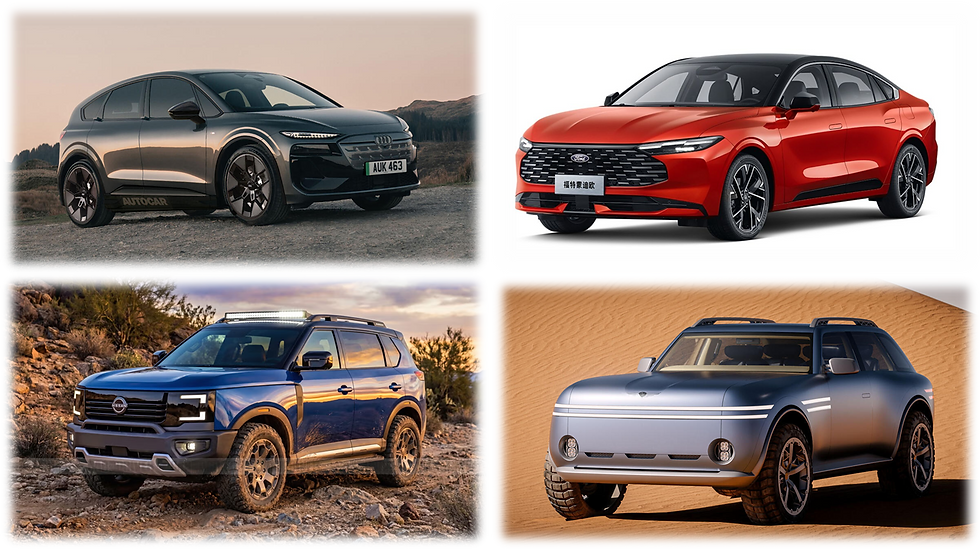
Nissan has confirmed that its upcoming body‑on‑frame strategy will extend beyond the revived Xterra to include a next‑generation Frontier, an Infiniti off‑road variant, and new versions of the Pathfinder and QX60, signaling a broad investment in rugged architectures.
AutoPerspectives is a reader-supported publication. To receive new posts and support my work, consider becoming a free or paid subscriber.
WHY IT MATTERS: While the Xterra’s cult following and continued U.S. enthusiasm for off‑road‑styled vehicles make its return logical, and the Frontier remains a steady if lower‑volume player, questions arise around repositioning the Pathfinder and QX60. Both models have evolved into high‑volume, unibody, family‑oriented SUVs, a formula that has proven more successful in the U.S. market than traditional body‑on‑frame alternatives, even in the luxury segment. As a result, fully replacing these models with body‑on‑frame designs could sacrifice volume despite the clear advantages such platforms offer in towing and off‑road capability.
THE BOTTOM LINE: Adding more BOF entries seems like a smart idea—but not if you’re sacrificing your higher-volume BFI entries.
Ford’s Affordability Play
At the National Auto Dealers Association convention, Ford outlined plans to launch five entirely new nameplates priced under $40,000 by the end of the decade, emphasizing accessibility rather than stripped‑down versions of existing vehicles. While an electric midsize pickup has already been confirmed, Ford noted that the remaining entries will be “multi‑energy,” spanning EVs, hybrids, and internal‑combustion options. The company suggested that these vehicles could cover a wide range of segments—including cars, SUVs, vans, and pickups—with likely candidates such as a replacement for the Escape, a new compact SUV EV, a successor to the Transit Connect, and potentially a revived sedan, possibly adapted from the Chinese‑market Mondeo.
WHY IT MATTERS: Affordability is a key issue in the U.S. auto market these days, and GM is already slightly ahead with the very competitive Trax, Envista, Trailblazer, and Encore. Ford clearly has some options (and some tricks up their sleeve), and that leaves Stellantis without much of a low-end strategy for first-time buyers.
THE BOTTOM LINE: These entries could bring a much-needed volume boost to both Ford and its dealers.
Genesis’ Solo Play
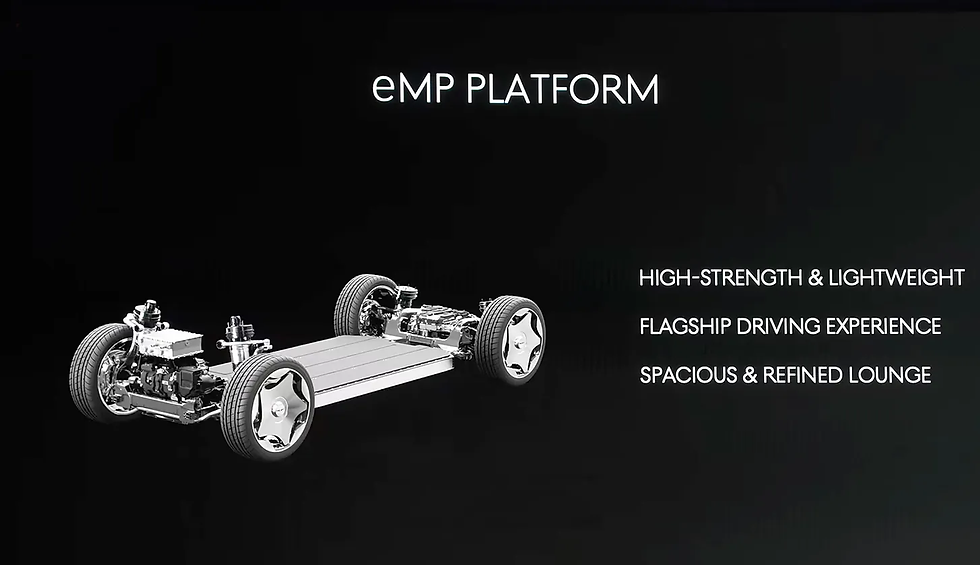
Genesis plans to introduce a new bespoke platform as early as next year, designed to support both electric and hybrid powertrains while better aligning with the brand’s desired driving dynamics. This architecture will be distinct from Hyundai Motor Group’s existing E‑GMP and M3 platforms, despite those already being heavily tailored for Genesis products. The platform is expected to debut with the long‑anticipated GV90, whose production timeline has reportedly slipped, and reflects Genesis’s broader strategic shift away from a purely EV‑centric approach toward electrified internal‑combustion solutions, including extended‑range EVs.
WHY IT MATTERS: Genesis had a rough launch, starting with two sedans in an SUV-preferring market and no unique sales channel—but they have slowly turned things around. This is the next logical step in their growth strategy. The investment is underpinned by a stated 2030 sales target of 350,000 units, though it remains unclear whether Genesis will also pursue unique powertrains alongside the new platform (and perhaps that’s the next announcement we’ll hear).
THE BOTTOM LINE: This follows recent forays into luxury offroading and personalization—so while Genesis’ volume is a long way off from the big three luxury brands, they are clearly targeting the top tier players.
Audi’s A2 Returns
Audi is preparing to revive the A2 nameplate, drawing inspiration from its early‑2000s aluminum supermini, with spy photos indicating a similar profile and distinctive split rear window. The new A2 is expected to ride on the updated ID.3 platform rather than the next‑generation SSP architecture, which has been delayed, resulting in a 400‑volt electrical system instead of the originally planned 800‑volt setup. Positioned as Audi’s smallest model following the cancellation of the A1 and Q2, the A2 will not necessarily be the brand’s cheapest offering, but it will serve as a new entry point into Audi’s lineup and is expected to be revealed before the end of the year.
WHY IT MATTERS: BMW and Mercedes are not staying out of the low-end luxury market and Audi needs to boost its presence there, so drawing on a cult icon might help set them apart. Although the SSP architecture sounds impressive, the expected improvements to the ID.3’s platform should result in a competitive product.
THE BOTTOM LINE: Not many people remember the A2, but those who do might be pleasantly surprised with the latest iteration.
#nissan #truck #xterra #ford #affordability #genesis #audi #a2 #ev #electricvehicle #automotive #autoperspectives #autonews
Comments