
Audi Reboots the A2

Audi has brought back the innovative 80mpg A2 small hatchback--with a zero-emissions twist...
Launched in late 1999, the original A2 boasted a fixed hood, a slick profile, and lightweight aluminum construction. Now, with the entry-level A1 and Q2 out of production, the A2 e-tron becomes Audi's smallest entry and most affordable EV. It shares its rear-drive (!) MEB platform with VW's ID.3 Neo, coming in about 10% more expensive than its non-luxury counterpart (at least in Germany). Although it's slightly more aerodynamic (with a Cd of 0.24), it's also about twice as heavy at over 4,000 pounds (and quite a bit roomier, too).
The powertrain is surprisingly complex: three battery sizes and four power outputs. That means 0-100kmh in as fast as 5.8 seconds, EV range as high as 401 miles WLTP (which works out to an impressive ~340 miles on the EPA cycle), and DC fast charging rates as high as 183kW. Both V2L and V2H capabilities are available.

The exterior design echoes the original, with a softly sloping roofline, high rear end, and wheels-at-the-corner proportions. Unlike the original, however, the new A2 has a grille (a very traditional-looking Audi 'singleframe') and much larger wheels (up to 20", versus 16" on the original). Optional matrix LED headlamps offer four different daytime running light signatures (including one that's animated). You'll also note the wing-style door handles, similar to some newer Volvos and BMWs.
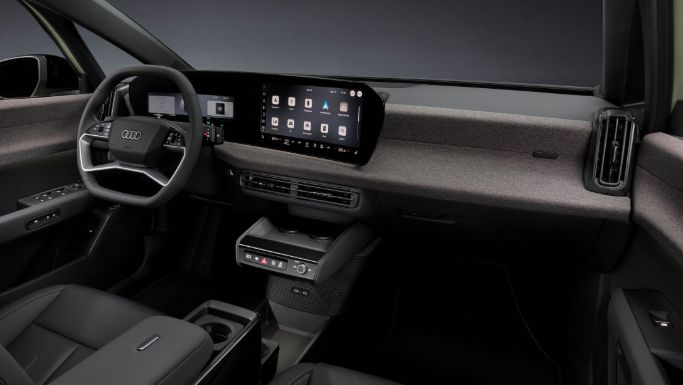
The interior is fairly traditional, with a twin-screen layout, flat-top/flat-bottom steering wheel, and "Softwrap" fabric trim on the doors and instrument panel. The large storage area between the seats and high-mounted (and easily accessible) twin-phone magnetic charging tray is a plus, as is the handful of physical controls. One notable new feature is the Fidlock magnetic fastening system which allows to easily add accessories like cupholders and a bag for the charging cable. As a nod to sustainability, over 300 components are made from recycled materials, including steel, aluminum, and plastic.
It looks like Audi has come up with a handsome and sophisticated entry-level EV that none of the other luxury brands can directly compete with (at least, for the moment); Mercedes' next-generation A-Class Electric and upcoming BMW i1 are still a couple of years away. The only real downside is that we won't see it here in the US.


Comments